Author name: Sapthami

digital marketing agency in Bangalore

How to Choose a Digital Marketing Consultant for Your Business

How to Choose a Digital Marketing Consultant for Your Business Choosing the right person to handle your digital marketing is not always easy. If you run a small business, you also need to think carefully before spending money on marketing. You are putting your money, your brand and sometimes even your customer data in another person’s hands. The problem is that it is not very easy to know who is actually good at digital marketing. One person may tell you they can get your website to the first position on Google. Another may say they can bring hundreds of leads through Instagram or Facebook. Someone else may offer SEO, Google Ads, website development, social media and everything else under one package. It can all sound good when you are hearing it for the first time. But before you sign up with anyone, try to look beyond the promises. The right digital marketing consultant should first understand your business and then tell you what needs to be done. They should not simply sell you a list of services. First, Be Clear About What You Want Before you start looking for a digital marketing consultant, think about what you really need for your business. Do you want more phone calls? More enquiries? Better sales? Or do you simply want more people to know about your business? Once you are clear about your goal, it becomes easier to find the right person and choose the marketing services that can actually help you. Do you want more enquiries through your website? Is your website getting visitors but very few customers? Are people unable to find your business on Google? Maybe your business is new and you want people to know about it. Or perhaps you have been running the business for years but have never really worked on digital marketing. The marketing needs of every business are different. For example, a salon may want more people from its local area to find it on Google. A real estate company may mainly want more enquiries from potential buyers. An online store may need Google Ads, Meta Ads and SEO, along with a website that makes it easy for customers to shop. So, don’t start by asking, “Which marketing package should I take?” First, think about what is not working in your business right now and what you want to improve. Once you know that, it becomes much easier to decide which services you actually need. Don’t Choose a Consultant Just Because They Can Run Ads Knowing how to create and run an advertisement is useful, but it doesn’t mean the person is the right consultant for your business. Running an ad is only one part of digital marketing. A good consultant should also understand your customers, your competition, your budget and what you want to achieve. More importantly, they should know how to check whether the ads are actually bringing useful enquiries or sales. Getting clicks is easy to report. Getting the right customers is what really matters. There is much more to it. A good consultant should take time to understand your customers, your competitors and what is different about your business. They should also know what you want people to do after seeing your ad, whether it is making a call, sending an enquiry or buying a product. For example, suppose your service costs ₹50,000, but most of the enquiries you receive are from people who are looking for a service that costs around ₹5,000. You may have received a lot of leads, but they are not the right leads for your business. This is why you should look at how a consultant understands your business, rather than only checking which marketing tools they know. Ask About Their Previous Experience You don’t necessarily need to choose someone who has worked with hundreds of companies. Someone who has worked with a smaller number of clients may have more time to understand your business and give you personal attention. What matters more is whether their previous work is relevant to what you need. Ask them about the businesses they have worked with and the kind of marketing work they handled. You can ask simple questions like: What problem was the client facing? What did you do to improve it? Which marketing methods did you use? How did you check whether the work was successful? What did you do when something was not working? The way they answer these questions can tell you a lot about their experience. Also, you don’t need someone who uses complicated marketing terms to impress you. A good consultant should be able to explain their work in simple words and make sure you understand what they are doing. Be careful on what they promise Be a little careful when someone promises results that sound too good to be true. For example, if someone says, “I will get your website to number one on Google within 30 days,” don’t agree immediately. The same applies if someone promises you a fixed number of leads every month without first understanding your business, customers, budget and competition. Digital marketing does not work the same way for every business. Results can take time, and several things can affect them. A consultant who gives you a realistic picture of what can be achieved is usually a better choice than someone who makes big promises just to get you to sign up. If someone says your sales will increase by a particular percentage simply because you started advertising, ask more questions. Marketing doesn’t work like a fixed formula. There are many things outside a consultant’s control. Your competitors are advertising too. Customer demand changes. Your pricing matters. Your website matters. Your sales team matters. Even the quality of your product or service can affect the final result. A good consultant should be confident about their work without making promises that they cannot control. ## SEO Is More Than Keywords A lot of businesses approach SEO with one

Ai prompt ideas

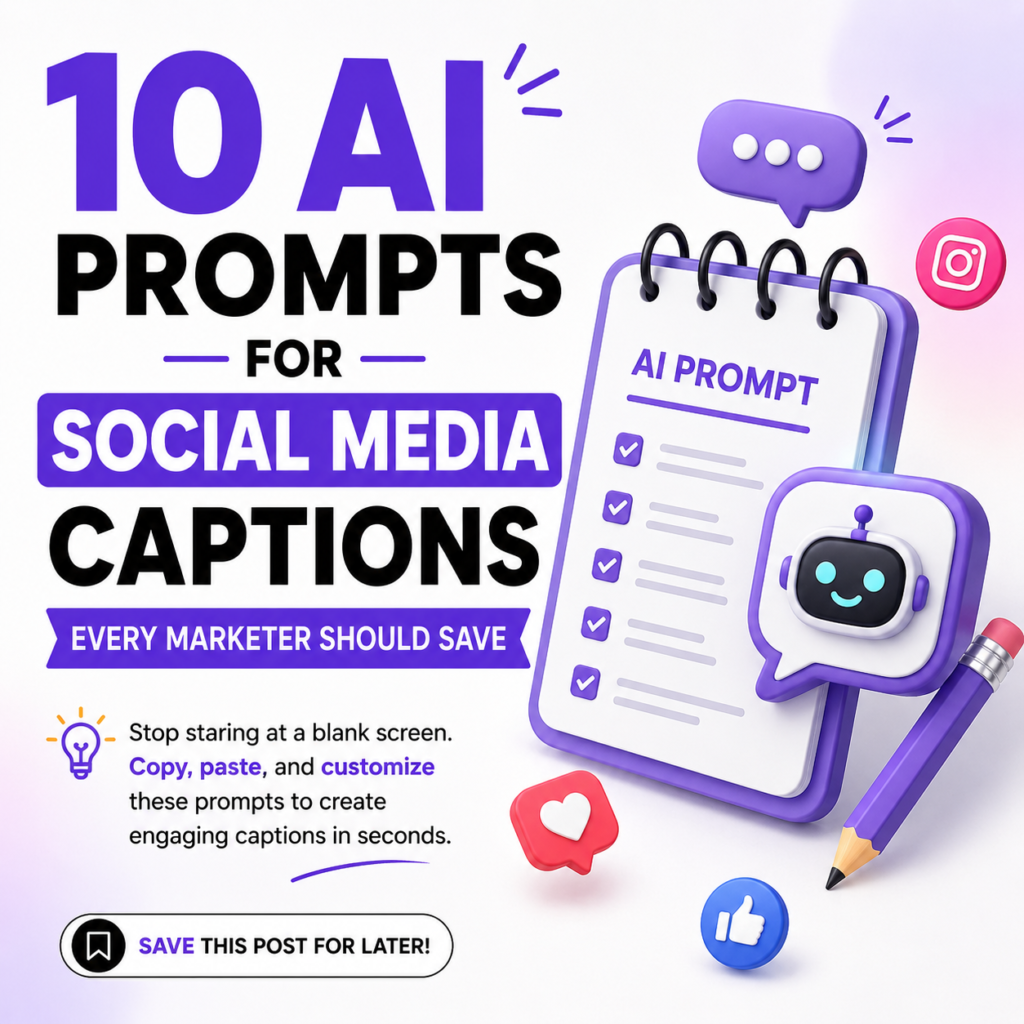
AI prompts for social media captions

Every Marketer Should Save top 10 AI Prompts for Social Media Captions . Stop staring at a blank screen. Copy, paste, and customize these AI prompts to create engaging captions in seconds. “Write an Instagram caption for [product/service]. Make it interesting and easy to read. Start with a strong opening line, include a clear call-to-action, and add a few relevant emojis.” 2. Storytelling Caption “Write a simple and relatable caption that shares the story behind [brand/product/service]. Make it feel personal and genuine, connect with the audience emotionally, and keep the language natural and easy to understand.” 3. Educational Caption “Write a simple and easy-to-understand caption for a carousel about [topic]. Explain the topic clearly, share useful and practical tips, and end with a call-to-action encouraging readers to save the post for later.” 4. Engagement Caption “Write a simple and engaging caption about [topic]. Ask an interesting and relatable question that encourages followers to share their thoughts in the comments. Keep the tone natural, friendly, and easy to understand.” 5. Product Launch Caption “Write an exciting and natural caption for the launch of [product/service]. Create curiosity without sounding too promotional. Highlight what makes it special, build a sense of excitement and urgency, and encourage people to take action.” 6.Testimonial  of Customers Caption “Turn this customer review into a natural and engaging Instagram caption. Highlight the customer’s experience in a genuine way, build trust with potential customers, and encourage people who are interested to get in touch. Keep the language simple, warm, and easy to understand.” 7. Festival or Holiday Caption “Write a warm and natural social media caption for [festival/holiday] that connects the celebration with my brand. Keep it simple, positive, and relatable. Avoid making it sound too promotional, and make sure the caption feels genuine and suitable for my audience.” 8. Behind the Scenes Caption “Write a simple and natural caption about the behind-the-scenes process of [business/activity]. Give the audience a glimpse of the real work that happens behind the scenes. Make it feel personal, honest, and relatable, without sounding overly promotional.” 9. Sales Caption “Write a friendly and persuasive caption for a limited-time offer on [product/service]. Clearly explain the offer, highlight why it is worth considering, and create a natural sense of urgency. Keep the tone conversational, simple, and genuine without sounding too sales-focused.” 10. Viral Reel Caption “Write a short and catchy Reel caption about [topic]. Start with a strong hook that grabs attention, use a few relevant emojis, and add 5–8 hashtags that match the topic and audience.” Pro Tip: Don’t just ask AI to “write a caption.” Give it more details, such as your target audience, preferred tone, platform, goal, and the action you want people to take. The more useful information you provide, the more relevant and natural the caption will be.

Ideas for review marketing

How to turn client reviews into sales

Most businesses collect reviews—but very few know how to use them to attract new customers. A great review is more than just feedback; it’s social proof that builds trust and helps people choose your business. 1. Turn Reviews into Eye-Catching Graphics Convert positive client reviews into branded Instagram posts or carousel graphics. Highlight the client’s exact words and keep the design clean and easy to read. 2. Create Testimonial Reels Record short videos featuring happy clients or use screenshots of reviews with trending audio. Pair them with before-and-after visuals to make the transformation more convincing. 3. Share Reviews in Stories Post reviews regularly on Instagram Stories and save them in a “Client Love” or “Reviews” Highlight so new visitors can see them anytime. 4. Add Reviews to Your Website Feature testimonials on your homepage, service pages, and booking page. Positive reviews reduce hesitation and increase confidence before someone makes an inquiry. 5. Use Reviews in Ads Include authentic customer testimonials in your social media ads. Real experiences often perform better than promotional messages because they feel more trustworthy. 6. Reply to Every Review Thank your clients publicly for their feedback. Professional and thoughtful responses show that you value your customers and encourage others to leave reviews too. 7. Turn One Review into Multiple Posts One review can become: A quote graphic A Reel A Story A carousel post An email testimonial A website feature This helps you get maximum value from every happy customer. The Bottom Line People trust people more than advertisements. Every positive review is proof that your business delivers results. Don’t let great testimonials sit unnoticed—turn them into content that builds trust, attracts new customers, and drives more sales.

Content marketing

Why Content Marketing Is Important for Small Businesses

In today’s digital world, customers don’t just buy products or services—they research, compare, and look for businesses they can trust. Content marketing helps small businesses build that trust by providing valuable information that answers customer questions and solves real problems. Unlike traditional advertising, content marketing focuses on educating and engaging your audience instead of directly selling to them. This approach helps attract potential customers naturally and builds long-term relationships. 1. Increases Brand Awareness Publishing high-quality blogs, videos, social media posts, and guides helps your business reach a wider audience. The more useful content you create, the more opportunities people have to discover your brand through search engines and social media. 2. Improves Search Engine Rankings Search engines like Google reward websites that regularly publish relevant, informative, and well-optimized content. By targeting the keywords your customers are searching for, you can improve your visibility in search results and drive consistent organic traffic to your website. 3. Builds Trust and Credibility Customers are more likely to choose a business that demonstrates expertise. Sharing practical tips, industry insights, and answers to common questions positions your business as a reliable source of information, making potential customers more confident in choosing your services. 4. Generates High-Quality Leads Every blog post, downloadable guide, or educational video can attract people who are actively searching for solutions. With clear calls to action, content can turn visitors into leads and eventually into paying customers. 5. Supports Social Media Marketing Creating fresh content gives you valuable material to share across social media platforms. A single blog post can be repurposed into multiple social media posts, infographics, short videos, or email newsletters, helping you maintain an active online presence. 6. Delivers Long-Term Value Unlike paid advertising, which stops generating traffic when your budget ends, quality content can continue attracting visitors for months or even years. Evergreen articles provide ongoing value and can become a steady source of leads over time. 7. Helps You Stand Out from Competitors Many small businesses focus only on promoting their products or services. By creating educational and helpful content, you can differentiate your brand, showcase your expertise, and give customers a reason to choose you over competitors. 8. Supports Every Stage of the Customer Journey Content marketing helps customers from the moment they become aware of a problem until they make a purchasing decision. Informational blogs attract new visitors, comparison articles help them evaluate options, and case studies or testimonials build confidence before they buy. 9. Cost-Effective Marketing Strategy For small businesses with limited marketing budgets, content marketing offers excellent long-term value. While it requires time and consistency, it can deliver a higher return on investment than many traditional marketing methods by continuously attracting organic traffic and qualified leads. 10. Creates Opportunities for AI-Powered Marketing With AI tools, small businesses can research topics, generate content ideas, optimize articles for SEO, personalize customer experiences, and automate content distribution. AI makes content marketing faster and more efficient while allowing businesses to focus on strategy and creativity. Conclusion Content marketing is one of the most effective ways for small businesses to build brand awareness, earn customer trust, improve search engine rankings, and generate qualified leads. By consistently creating valuable, customer-focused content and combining it with SEO and AI-powered tools, small businesses can compete with larger brands and achieve sustainable online growth. Businesses that invest in content marketing today are building a stronger digital presence that continues to deliver results well into the future.

Scroll to Top